Allow me to introduce you to the island I have fallen in love with. Crete is the biggest Greek island, the 5th biggest in the Mediterranean, and the 88th biggest island in the world. It’s an island rich in history and culture. The people are proud of their island, and it shows in everything they do. Whether you’re looking for amazing food, beautiful beaches, history or you just want to eat your way around the island- it has it all! My advice when you’re planning a trip to Crete- try a mix of everything, but if you’re driving, watch out for the goats!
Olive Oil– What is Crete’s secret behind the amazing food? It seems to start and end with olive oil! I’m sure you know Greeks consume a lot of olive oil, but can you believe the average person consumes 1 liter of olive oil per year, while the average Cretan consumes up to 30 liters! It is a part of the island’s history. The Olive tree of Vouves on Crete is probably the oldest olive tree in the world, and it still produces olives. It is confirmed to be at least 2000 years old based on tree ring analysis, but it’s claimed to be between 3000–4000 years old! 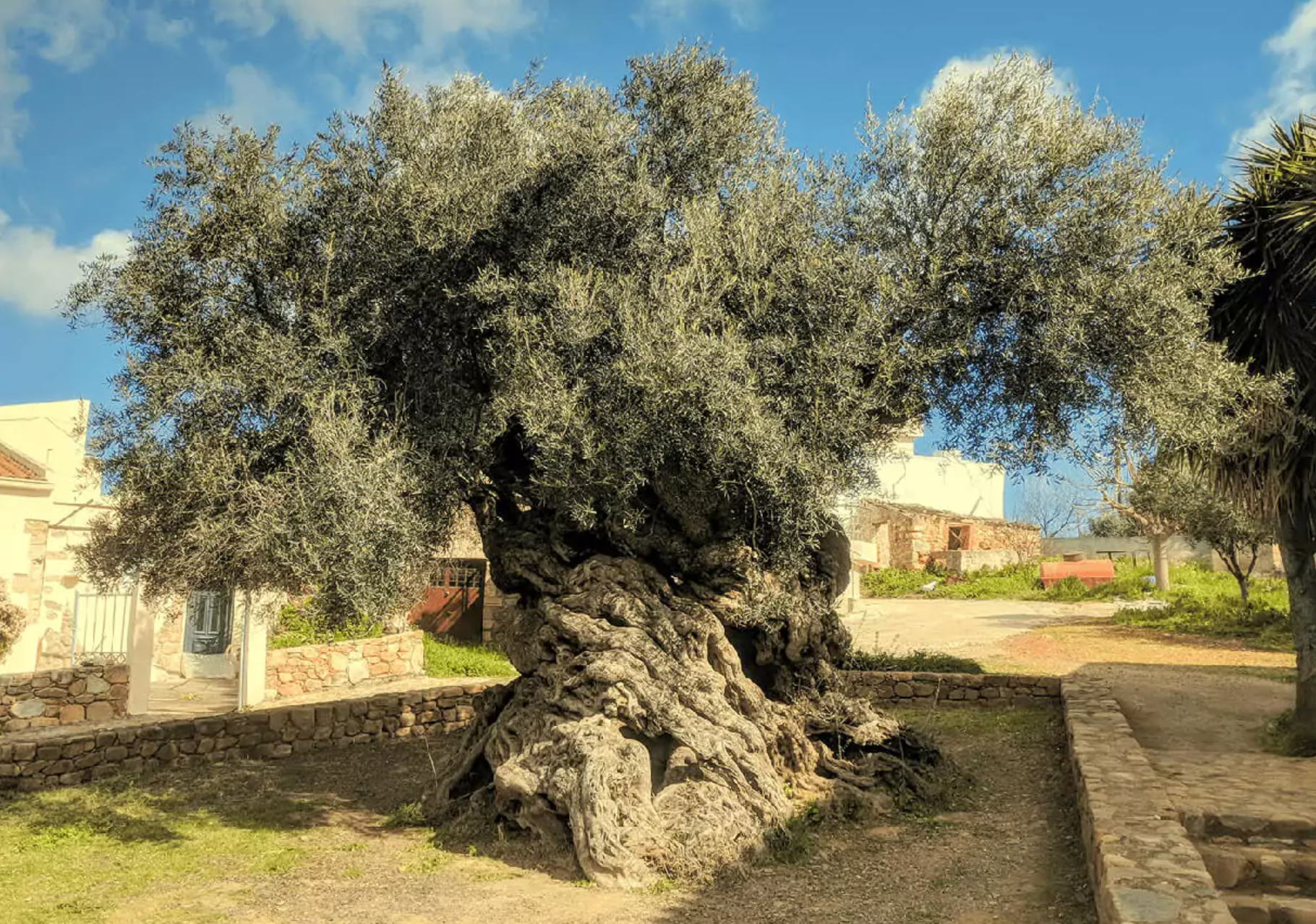
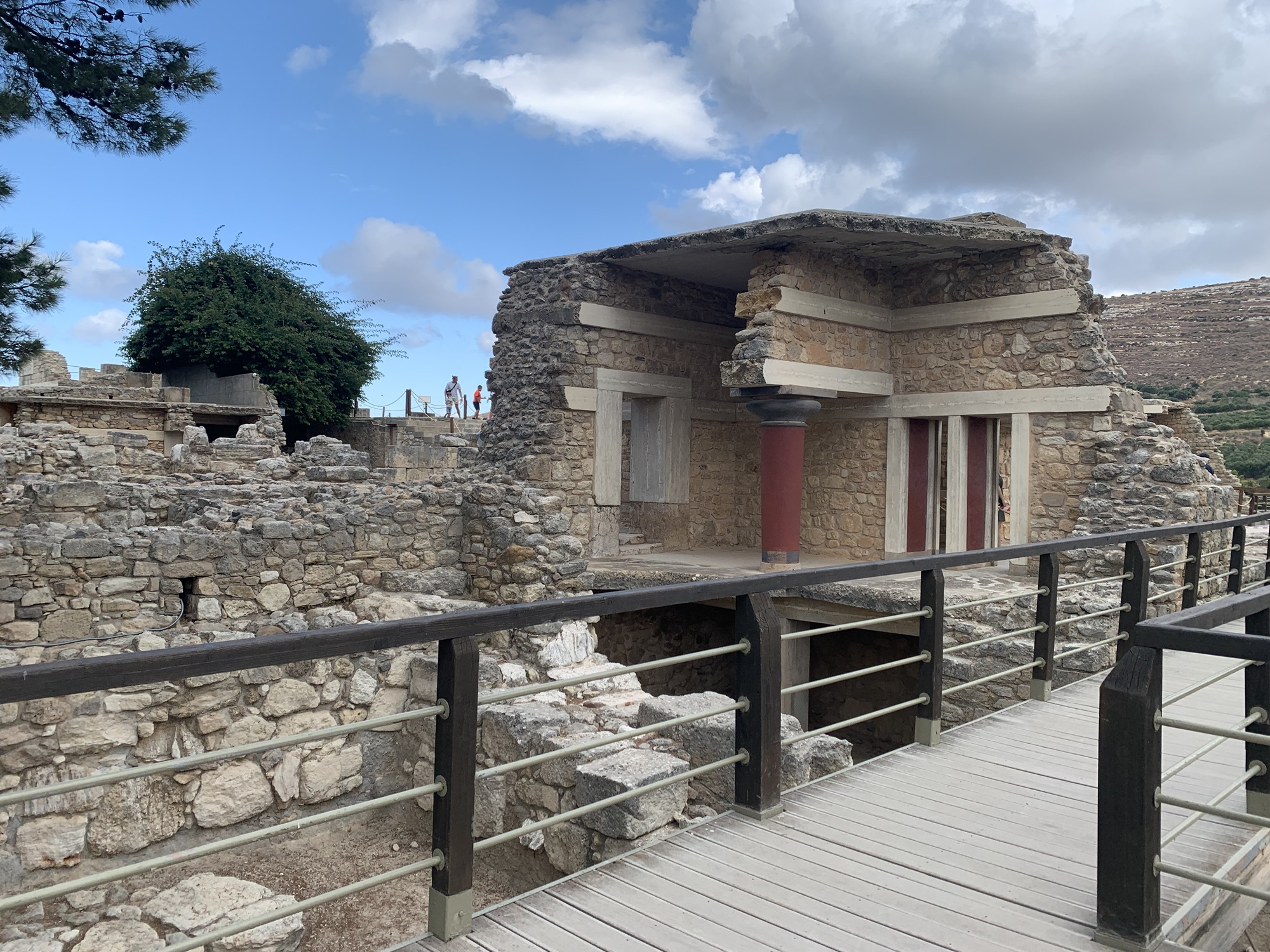
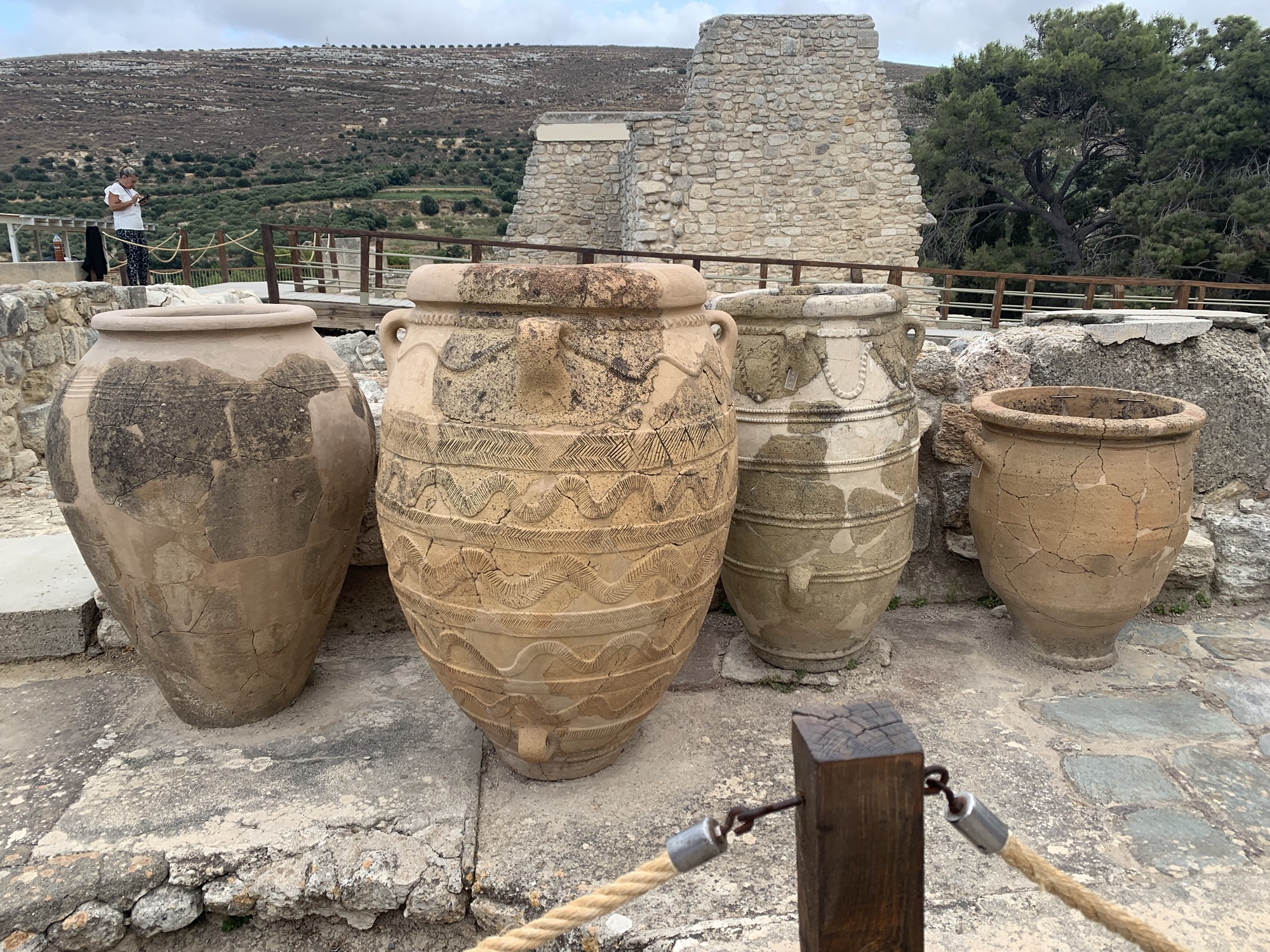
According to Greek mythology, Crete was the birthplace of Zeus, the king of the gods. It’s also associated with the legend of the Minotaur, a half-man, half-bull creature confined in the labyrinth beneath the Palace of Knossos. The Palace is the most famous tourist destination on Crete. You can’t go to Crete without visiting Knossos, it is the largest Bronze Age archaeological site and thought to be Europe’s oldest city. The birthplace of Europe’s oldest civilization, the Minoans. My advice is to go later in the day and avoid the crowds. 
Crete has no dangerous mammals or snakes and the Ancient Greeks credited this to the labors of Hercules who honored the birthplace of Zeus by eradicating all harmful or poisonous animals. While there are no dangerous animals, Goats are everywhere! If you’re driving around the island of Crete you may notice something unique about its wildlife. Goats are on the roads, in the fields, and even climbing up the rock walls! Many different species of animals can be found on Crete, but the most famous is the native mountain goat Kri-Kri. 
Raki is usually served with fruit or sweets after a meal, it usually comes before the bill and is complimentary. Dating back to ancient Crete, this strong, clear alcohol originally hails from Turkey and has always been a symbol of hospitality and culture. According to the family, it’s a digestive and having Raki after a big meal helps you settle your stomach- sometimes its flavored with lemon or honey but my favorite is the Rose Water Raki, hard to find but worth the search. Raki is a Crete specialty, don’t go to Athens expecting to be served Raki with your bill, you’ll be disappointed. 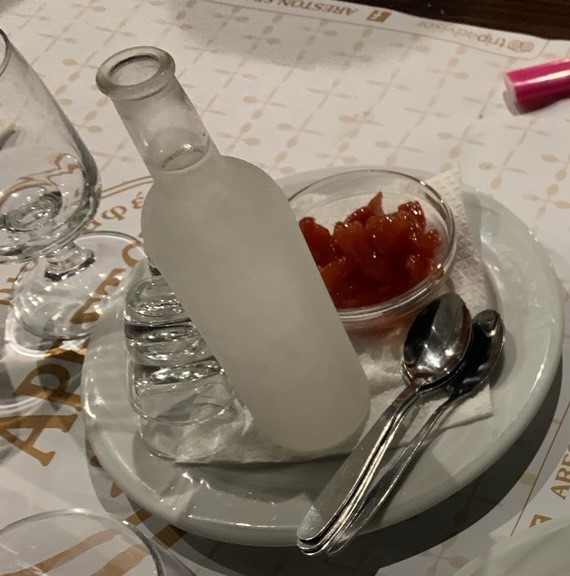
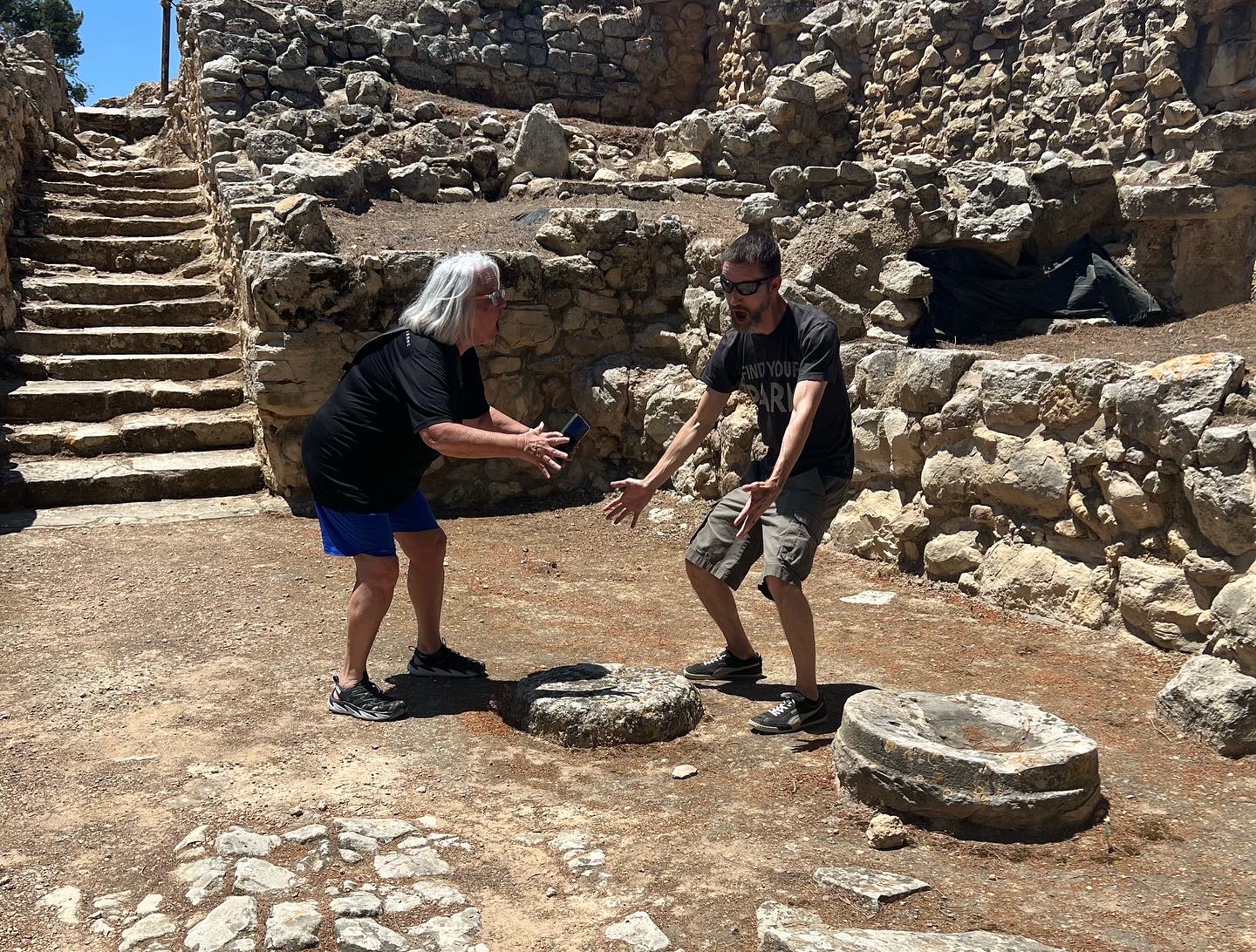
The Phaistos Disc is one of the most intriguing archaeological discoveries from the Minoan civilization on the island of Crete. The disc was discovered in 1908 by Italian archaeologist Luigi Pernier at the Minoan palace of Phaistos (or Phaestos) in southern Crete, in the basement of the palace’s northeastern apartments. The exact dating of the Phaistos Disk is uncertain, but it is generally believed to have been created during the Minoan Bronze Age, likely around the middle or late second millennium BCE, making it over 3,500 years old. As you can see from our visit you can get up close to where the disc was discovered, or even reenact the finding as my husband and friend decided to do…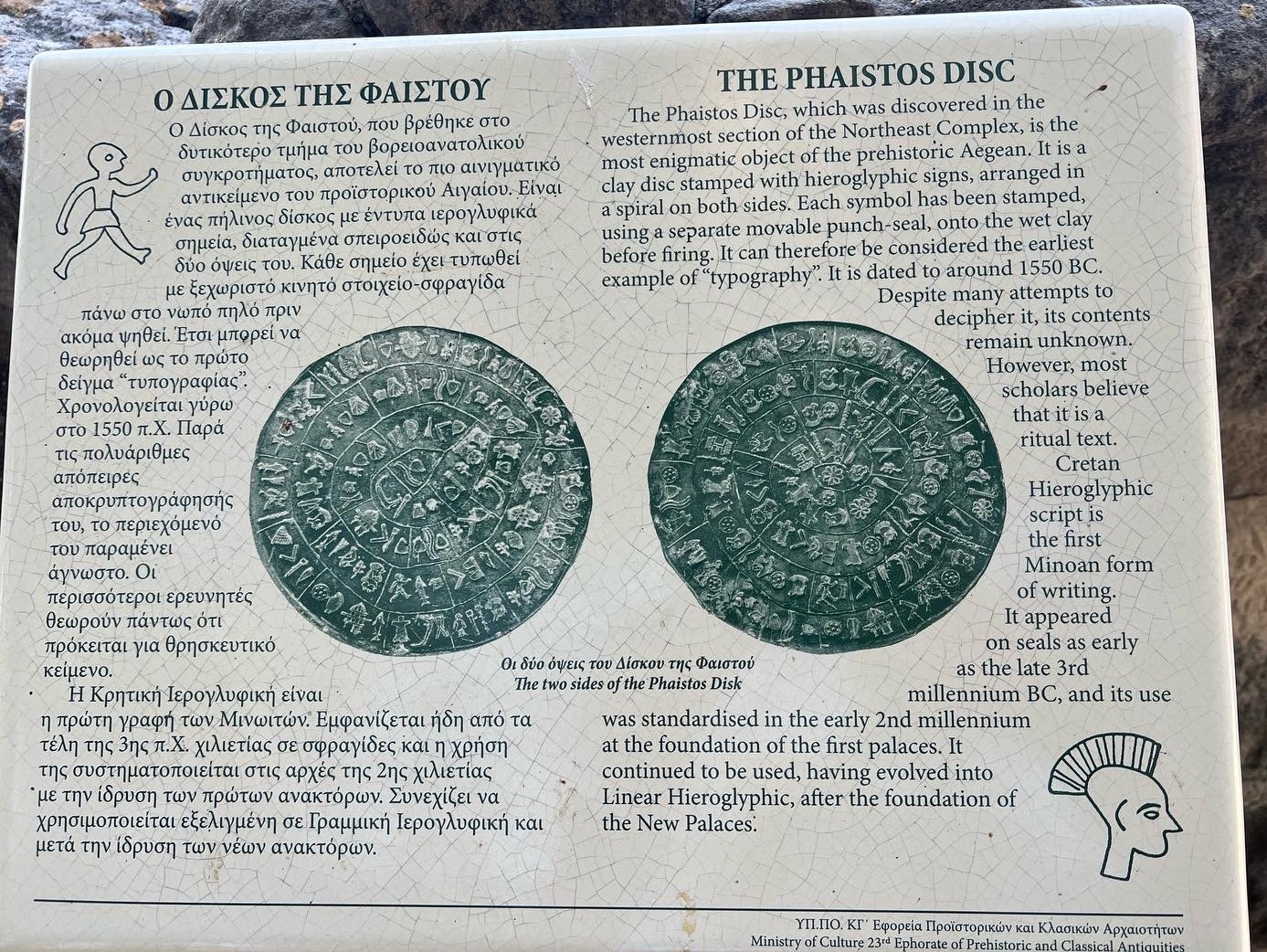
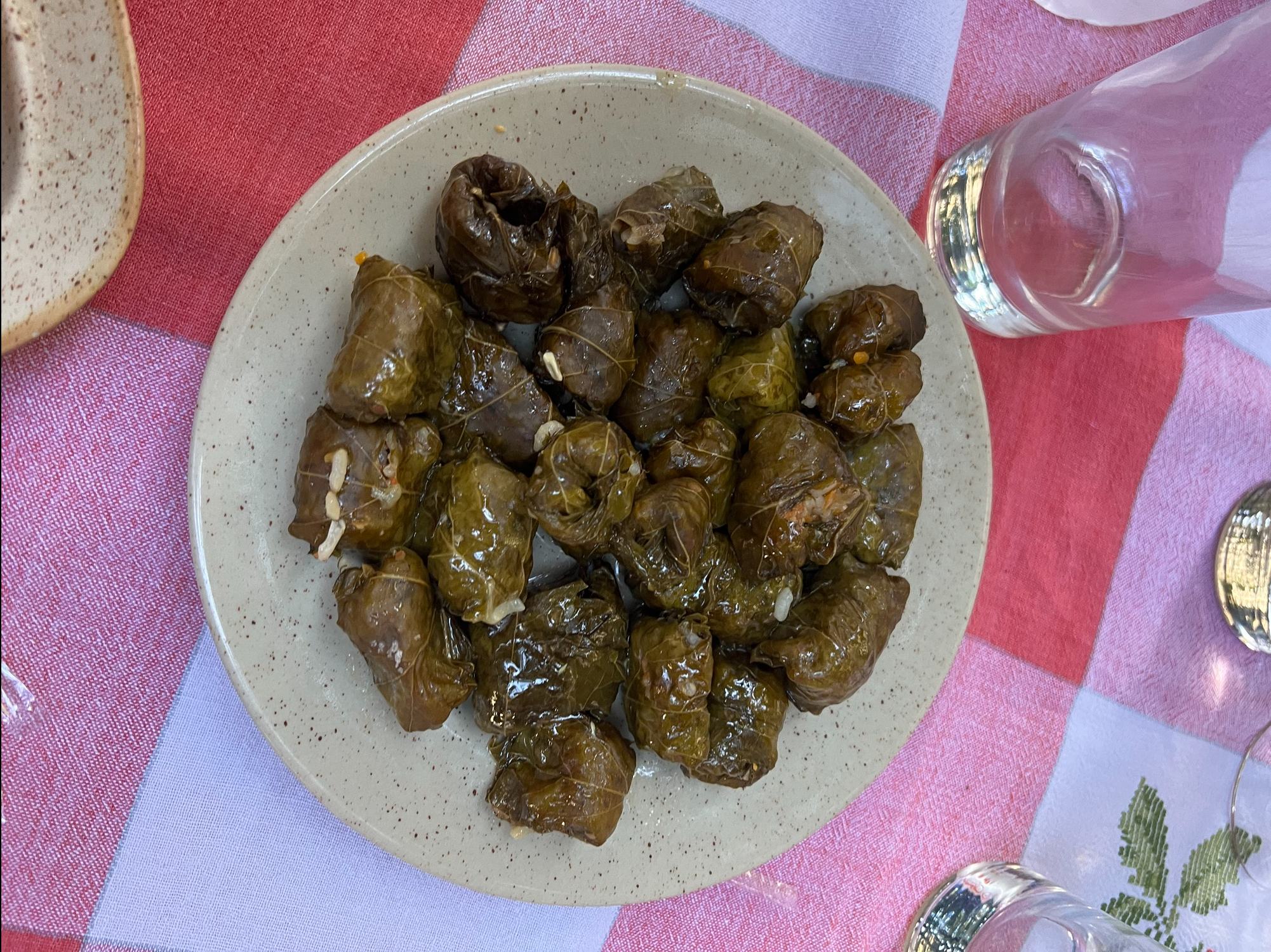
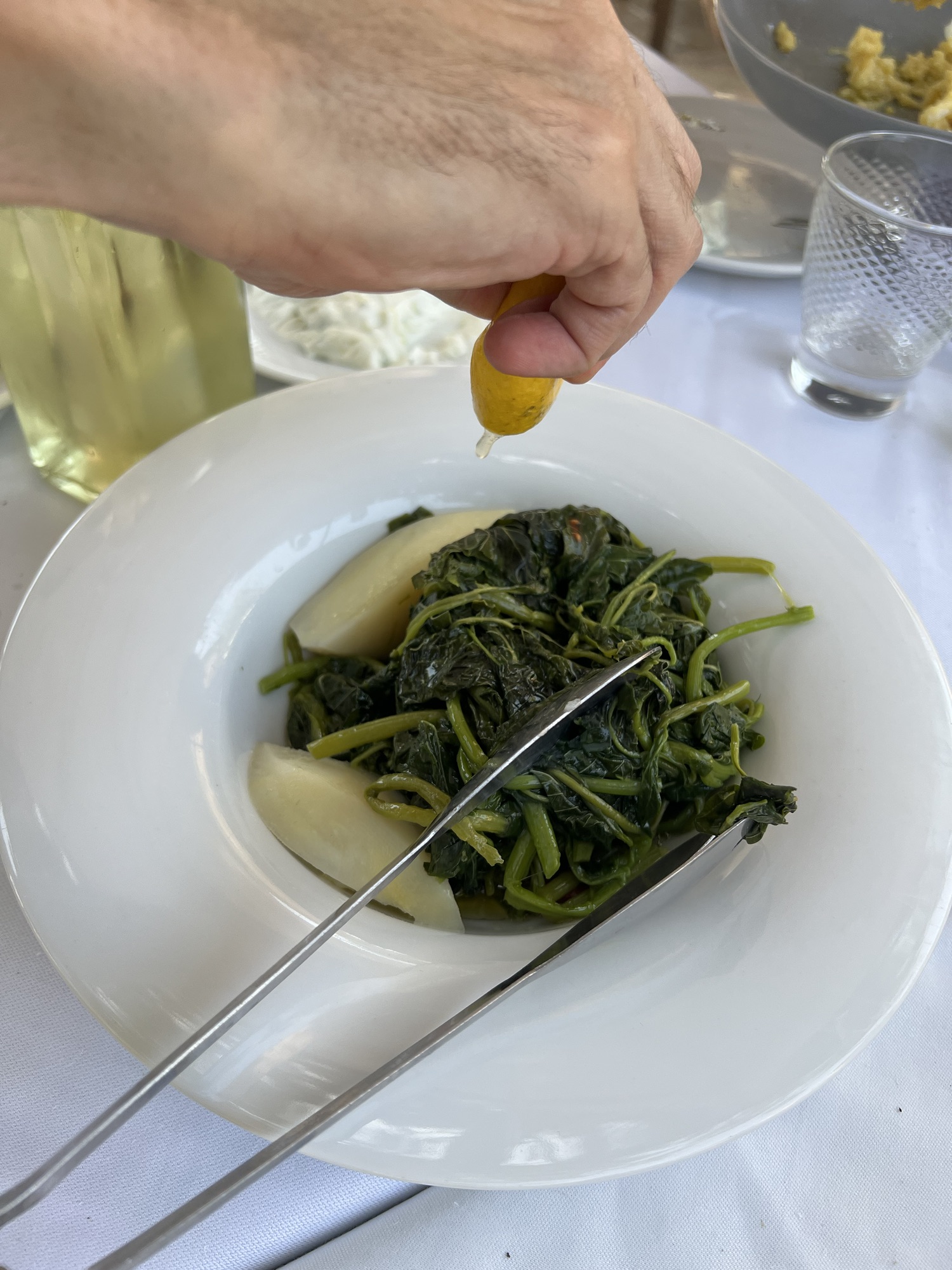
Hungry for more? Next, I will tell you about the food of Crete, not to be missed. Here’s just a preview… 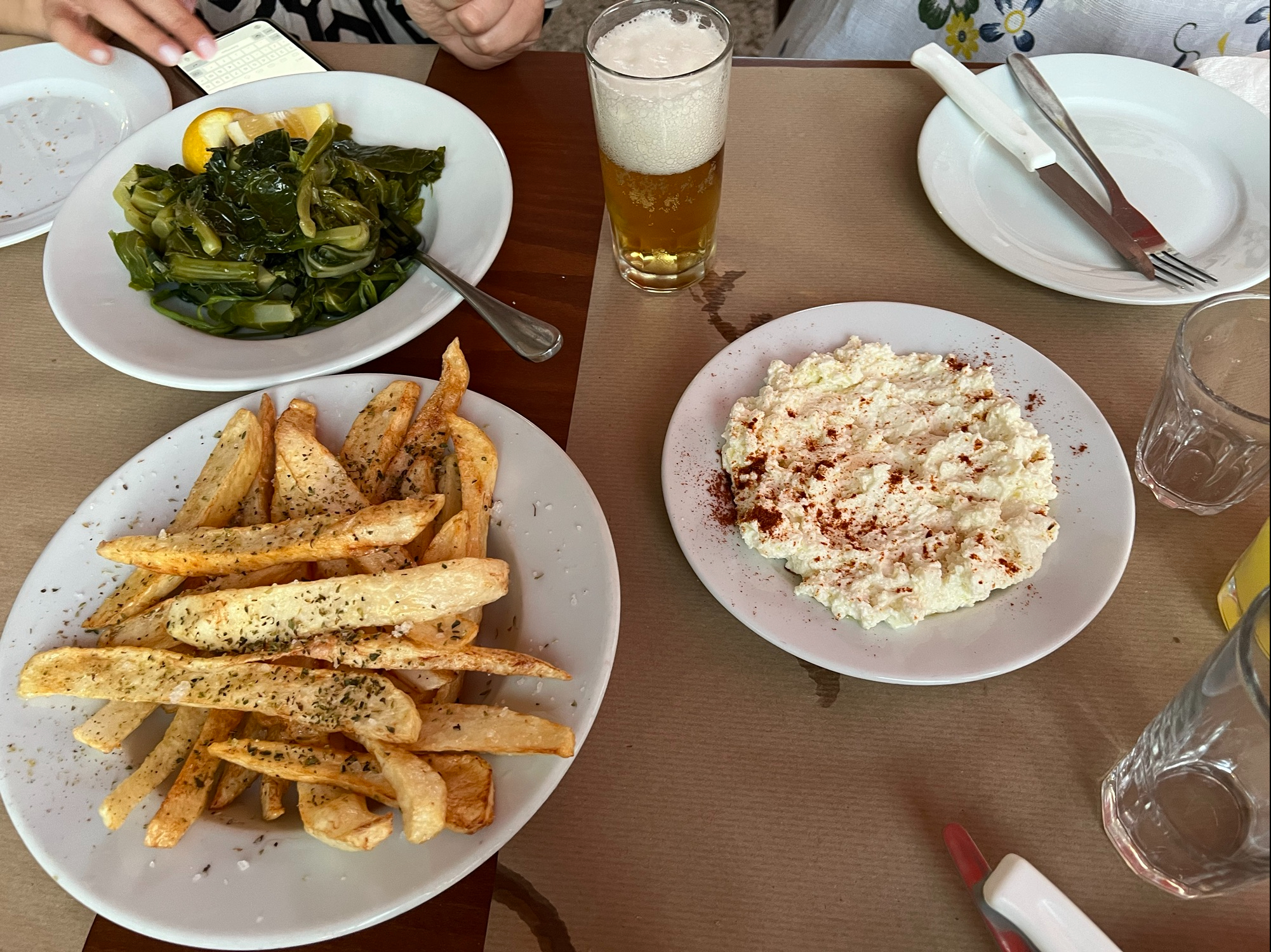

 Journey To Crete
Leave a comment